



Is it "made of" or "made from"?
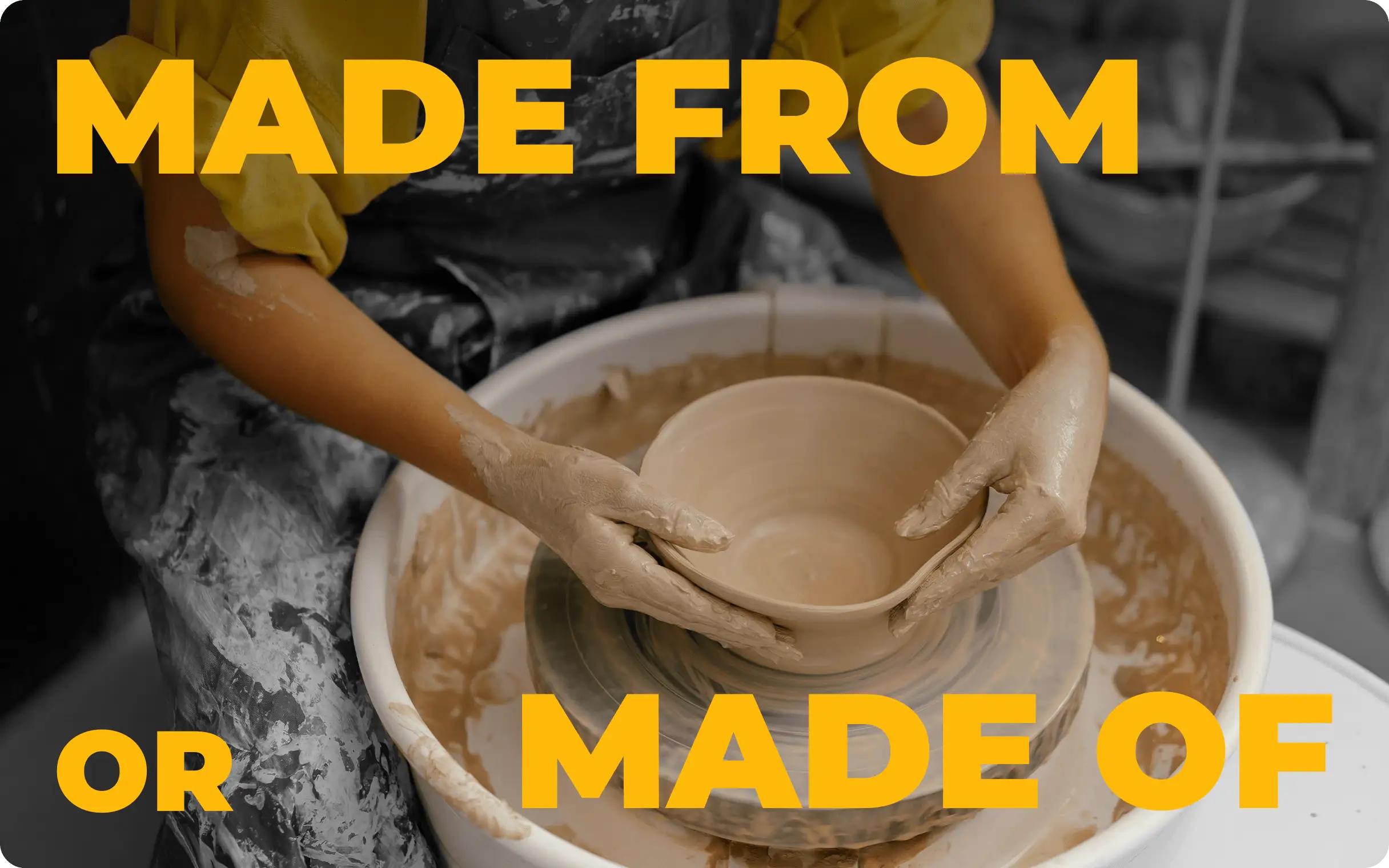
Everybody loves a good DIY project, until you have to explain it in English. Is that candle made of wax, or made from it? What about the bread you baked or the soap you experimented with last week? In German, aus covers all of these. In English, it comes down to one question: can you still recognize the material in the final product?
We use "made of" when you can still see what the thing is made of. The material might be cut, shaped, or put together, but it hasn't really changed.

In casual conversation, you'll also hear "made out of," which means the same thing: "We built a fort out of cardboard boxes."
We use "made from" when the material has changed so much that you can't recognize it anymore. It's been processed, cooked, melted, or turned into something new.

You won't find any grapes in a glass of wine, so it's "made from."
When you're talking about food and want to mention one of the ingredients, use "made with."
So next time you're showing off your latest DIY project, whether it's a candle, a loaf of bread, or a bookshelf, ask yourself: does the material still look the same, or has it completely changed? Get that right, and you're good to go.
What do great English and a well-built bookshelf have in common? They both start with a strong foundation. Build yours with our Daily Dose of Denglisch Docs!



We are committed to equity,
diversity, and inclusion.
We welcome students,
educators, users, researchers,
and employees from a diverse
set of backgrounds.
Our own backgrounds vary in
terms of socioeconomic status,
religion, race, ethnicity,
gender
identity, sexual orientation,
age, neurodiversity,
disability,
and nationality.
In short: Be you. Do you.
We love and embrace
what makes you you. 
Thank you for inviting us to assess
your web copy!
One of our copy analysts will take
a close look at your website and
get back to you right away.
We appreciate your trust.


