



How to express anger in English

There's a big difference between being a little annoyed and being absolutely furious. And English has a different expression for every point in between. The hard part is knowing which one fits the moment, and how to say it in a way that sounds natural.
The simplest way to express anger in English is also the most direct. "I'm angry" and "I'm mad" both work, and while they mean roughly the same thing, "mad" tends to feel slightly more casual. You'd use it with friends or in everyday situations, not in a formal complaint to your manager.
"Annoyed" is a step below angry. It's what you feel when something is bothering you but hasn't quite pushed you over the edge yet. And if you want to signal that something is getting on your nerves without making it a big deal, "I'm a bit frustrated" is a natural, measured way to do it.
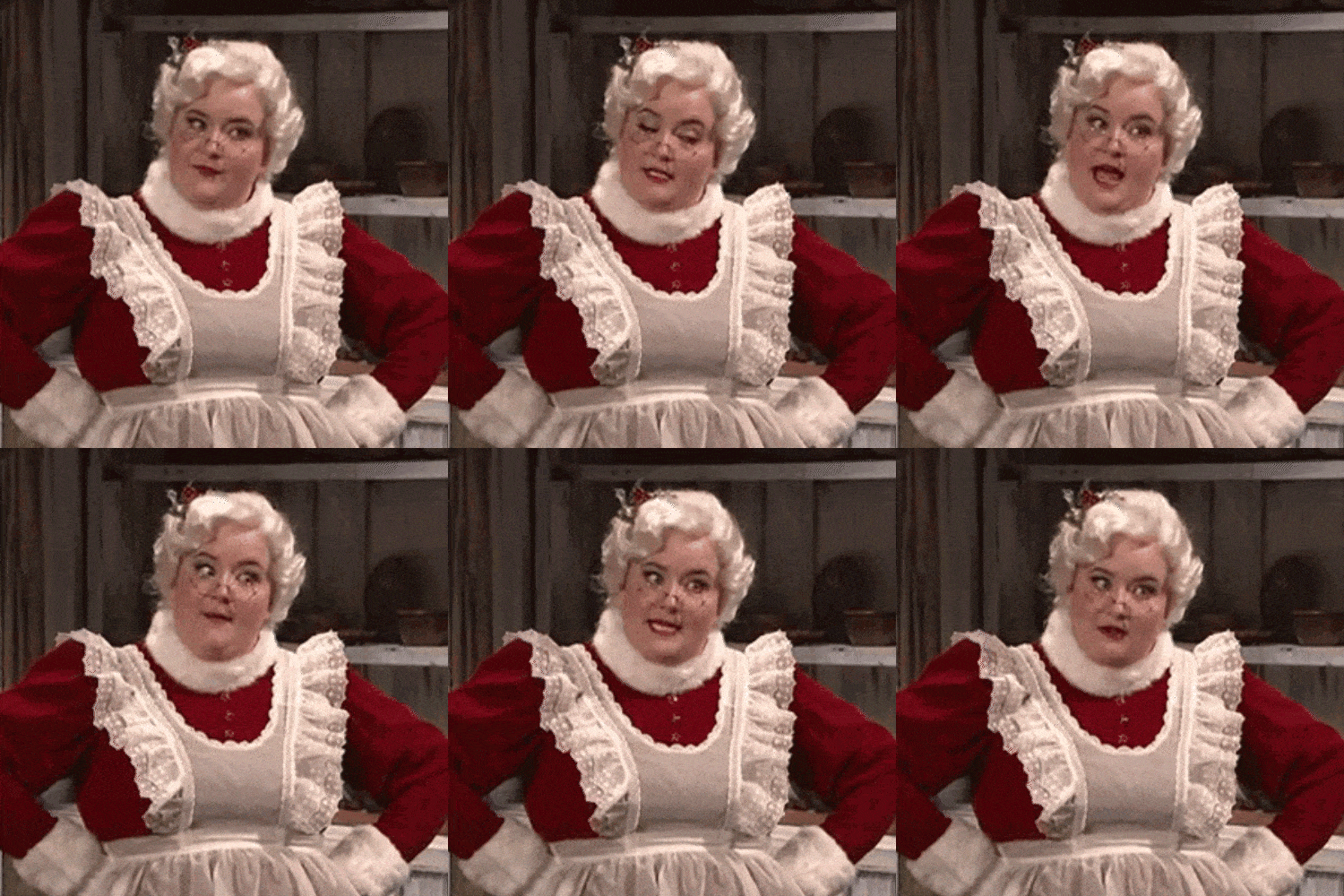
If you need someone to stop doing something that's irritating you, "quit it" and "knock it off" are both direct and casual. Neither is particularly polite, so save them for situations where you're comfortable being blunt.
This is the middle ground. You're past mildly annoyed but not quite at the point of losing it. English has some very specific expressions for this stage.
"You're getting on my nerves" and "You're pushing my buttons" are for when someone has been irritating you for a while and it's starting to wear on you.
And when you've genuinely had enough, "I've had it" or "I've had it up to here" makes that very clear.

In English, anger is often described in terms of heat, and the expressions reflect that. When something makes you very angry very quickly, you might say "I'm fuming" or "I'm heated."
"I'm getting hot under the collar" means your anger is building and starting to show. "I've reached my boiling point" takes it a step further. It means that you're at the limit of what you can tolerate and things could tip over at any moment.
When you're on the verge of completely losing your temper, "I'm about to blow my top" or "I'm about to go off" paint a pretty clear picture of where things are headed.

When you've moved past frustration and into full-blown anger, the vocabulary shifts too. "Irate," "furious," and "enraged" are all stronger than "angry" and carry a sense of intensity that the simpler words don't.
"Seething," "livid" and "fit to be tied" sit in the same territory. They all suggest anger that is intense but being held in . . . just barely.

One thing that confuses people is knowing how strong an expression is and whether it fits the situation. Some anger expressions are perfectly fine between friends but would raise eyebrows in a professional setting.
On the casual end, "you're pissing me off" and "I'm pissed off" are common and widely understood, but they're informal and a little crude. Use them with people you know well, not with colleagues or anyone you want to impress.
In professional settings, you'll want something more measured. "Perturbed" and "vexed" both convey displeasure without the rawness of the casual expressions.
"I've got a bone to pick with you" sits somewhere in the middle. It's direct enough to signal that something is wrong, but not aggressive enough to put someone on the defensive. It works in both casual and professional contexts.
When your anger is more controlled but still very much there, "I'm riled up" and "I'm about to go ballistic" are useful. One is measured, the other is a warning.
Sometimes you just need to let off some steam, and there's nothing wrong with that. What matters is being able to express it clearly and in the right way for the situation. With the right words, anger doesn't have to get lost in translation.















We are committed to equity,
diversity, and inclusion.
We welcome students,
educators, users, researchers,
and employees from a diverse
set of backgrounds.
Our own backgrounds vary in
terms of socioeconomic status,
religion, race, ethnicity,
gender
identity, sexual orientation,
age, neurodiversity,
disability,
and nationality.
In short: Be you. Do you.
We love and embrace
what makes you you. 
Thank you for inviting us to assess
your web copy!
One of our copy analysts will take
a close look at your website and
get back to you right away.
We appreciate your trust.


