



The right words for talking about skin tone

Skin tone is one of those topics where good intentions aren't quite enough. It comes up more than you'd expect, in compliments, in describing someone, in conversations about diversity, and it's an easy topic to fumble in a second language.
We'll go through the vocabulary that works, how to give a genuine compliment, and a few things worth avoiding.
"Tone" refers to the actual color of someone's skin, which comes from melanin, the pigment that determines how light or dark it is. "Undertone" is different, it's the subtle hue underneath that color, usually described as warm, cool, or neutral. Two people can have a similar tone but different undertones.
For describing tone itself, English generally uses a small set of neutral words: "fair," "light," "medium," "tan," "deep," and "dark." "Olive" is its own category, used for a light to medium tone with green, gold, or yellow undertones, common in places like the Mediterranean, Latin America, and parts of Asia. When you need to talk about the range within any of these, the word "shade" does the job. It’s especially useful when matching makeup or discussing subtle variation.
A few ways these come up:
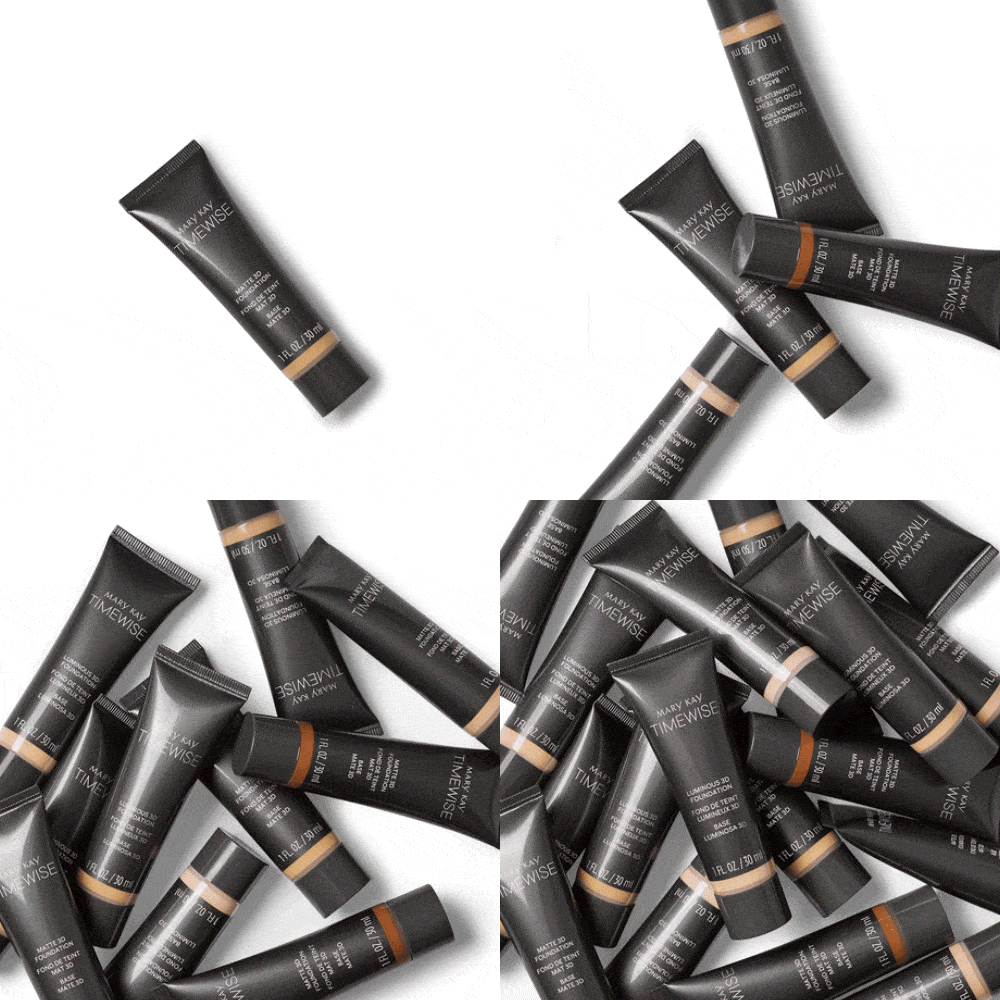
A compliment about someone's skin tone works best when there's a natural reason for it. Like a shared skincare routine, a shopping trip for foundation, or a conversation about a new tan. Outside of those contexts, commenting on someone's complexion out of nowhere can feel a bit odd, even when it's meant kindly.
In the right setting, phrases like "your skin looks so healthy" or "that shade suits you perfectly" work well. They focus on the specific thing you're noticing rather than the complexion as a whole. If someone's just come back from a trip, "your tan looks great" is a natural, easy compliment. And in a beauty or skincare context, describing someone's complexion as "glowing" or noting how well a particular shade matches their skin tone reads as genuine rather than random.
A few ways these might come up:

A few phrases that sound descriptive on the surface actually carry a lot of baggage. "Yellow skin" and "red skin" fall into this category, and they've historically been used to reduce entire ethnic groups to a single crude label. They read as offensive rather than neutral, even if that's not the intent behind them. The safer route is always one of the standard descriptors: fair, light, medium, tan, deep, or dark.
Conversations about skin tone and fairness come up more than we'd like sometimes, and avoiding them isn't really the answer. "Colorism" describes prejudice or discrimination against people based on their skin tone, usually within the same ethnic or racial group. For example, someone being treated better or worse because their skin is lighter or darker than others in their own community. Being able to name it is part of being able to talk about it honestly.
So next time this comes up, there's no need to tiptoe around it or change the subject. You'll know what to say, you'll be understood the way you meant to be, and you won't have to worry about offending anyone without meaning to.















We are committed to equity,
diversity, and inclusion.
We welcome students,
educators, users, researchers,
and employees from a diverse
set of backgrounds.
Our own backgrounds vary in
terms of socioeconomic status,
religion, race, ethnicity,
gender
identity, sexual orientation,
age, neurodiversity,
disability,
and nationality.
In short: Be you. Do you.
We love and embrace
what makes you you. 
Thank you for inviting us to assess
your web copy!
One of our copy analysts will take
a close look at your website and
get back to you right away.
We appreciate your trust.


