



Everyday phrases that came straight out of fairy tales

Rapunzel. Hansel and Gretel. Rumpelstiltskin.
They feel like part of English culture. But they aren't. These stories were collected in Germany in the 1800s, and they crossed into English so completely that we never think twice about them.
Fairy tales left their mark on more than our bookshelves, though. They're in the way we talk. Phrases like "fairy godmother," "Prince Charming," and "happily ever after" turn up in everyday English all the time, and most of us use them without ever thinking about where they came from.
In the early 1800s, two brothers started collecting folk tales from across what is now Germany. The names alone tell you how far the stories traveled. Hansel and Gretel. Rapunzel. Rumpelstiltskin. They crossed into English almost untouched.
Others got translated but stayed instantly recognizable. Schneewittchen became Snow White. Kleine Rotkäppchen turned into Little Red Riding Hood. Dornröschen became Sleeping Beauty. English-speaking children grew up with these characters as if they'd always belonged to the culture.

And even the way we refer to the authors is interesting. We say "the Brothers Grimm," not "the Grimm brothers." With most other pairs, English puts the surname first. Here, it went the other way, and that's just how it stayed.
In the classic stories, fairy tales do come true. Cinderella gets her prince. Jack beats the giant. The curse is lifted.
But when we call something a fairy tale in everyday conversation, we usually mean the opposite.
“Buying a house on that salary? That’s a fairy tale.”
“They think the project will be done by Friday. Pure fairy tale.”
A fairy tale is now shorthand for something unrealistic, too good to be true, or disconnected from how things actually work.
Plenty of everyday expressions come straight from the world of fairy tales, even if most people never stop to think about where they came from.
Take "fairy godmother." When someone calls you theirs, they mean you helped them when nobody else would. It comes from Cinderella, but today it's less about magic and more about timing. "My colleague was my fairy godmother when she helped me prepare for that presentation."
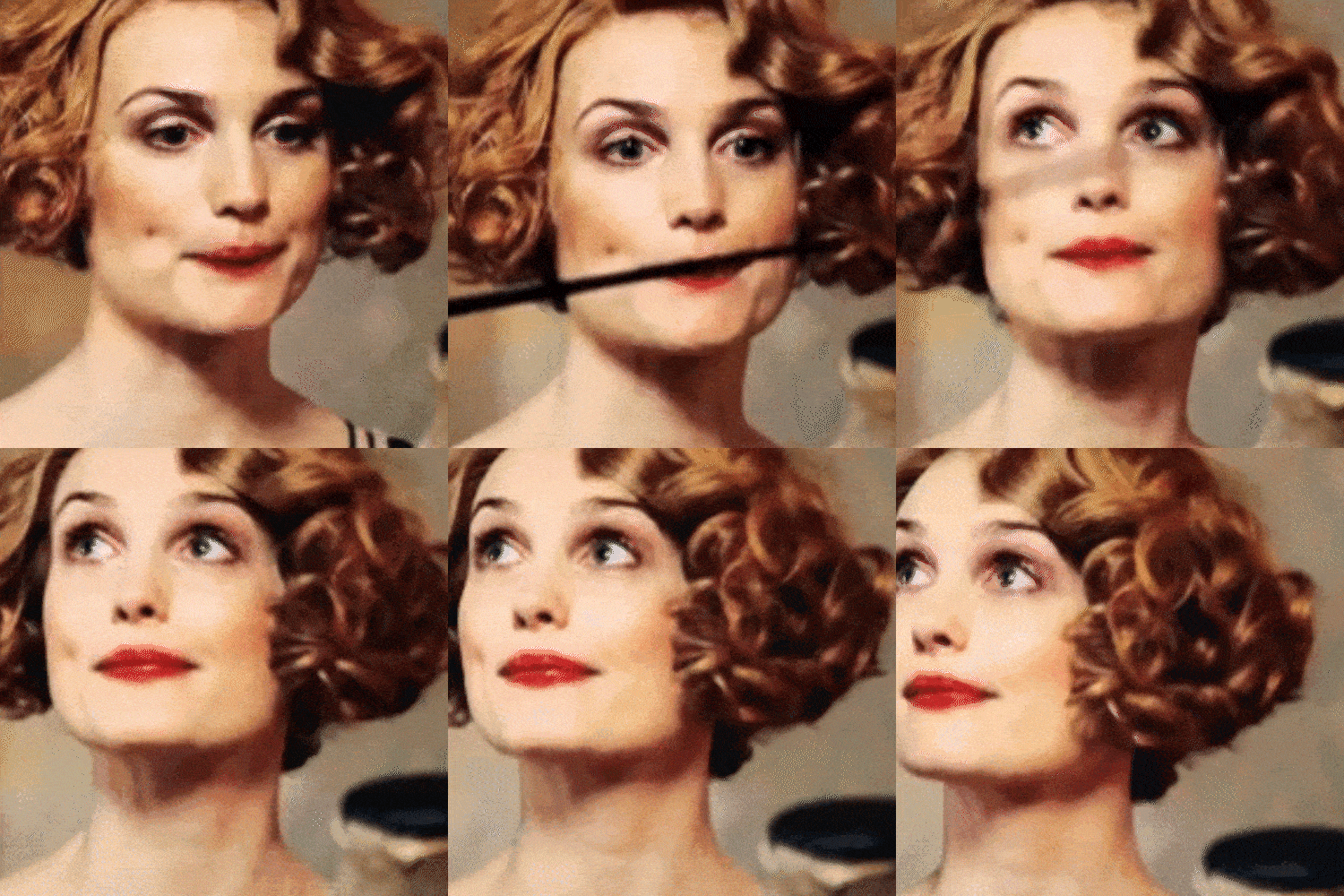
"Cast a spell" works the same way. Literally, it's what witches do. In everyday use, it describes the kind of hold someone has over you that you can't quite explain. "I don't know what it is about her. She must have cast a spell on me."
And then there's "wave a magic wand." Nobody truly believes in magic wands, which is exactly why the phrase works. It means fixing everything instantly, and it almost always comes up in situations where that kind of solution doesn't exist. "I can't just wave a magic wand and solve the whole budget issue."
"Prince Charming" comes from the familiar fairy-tale hero who rescues the princess. In everyday English, it describes a man who seems almost too good to be true. Polite, well-presented, says all the right things. "Everyone likes the new manager. Total Prince Charming."
"Damsel in distress" describes someone who needs rescuing. Originally it referred to the helpless princess in fairy tales. Today it's used more often ironically. "Relax, I'm not some damsel in distress. I can fix the problem myself."
Then there's the "knight in shining armor," the one who rides in to save the day. In real life, it rarely involves armor and usually something far more ordinary. The person who shows up at the right moment with exactly what you needed. "I forgot my charger and Tom showed up with a spare. Absolute knight in shining armor."
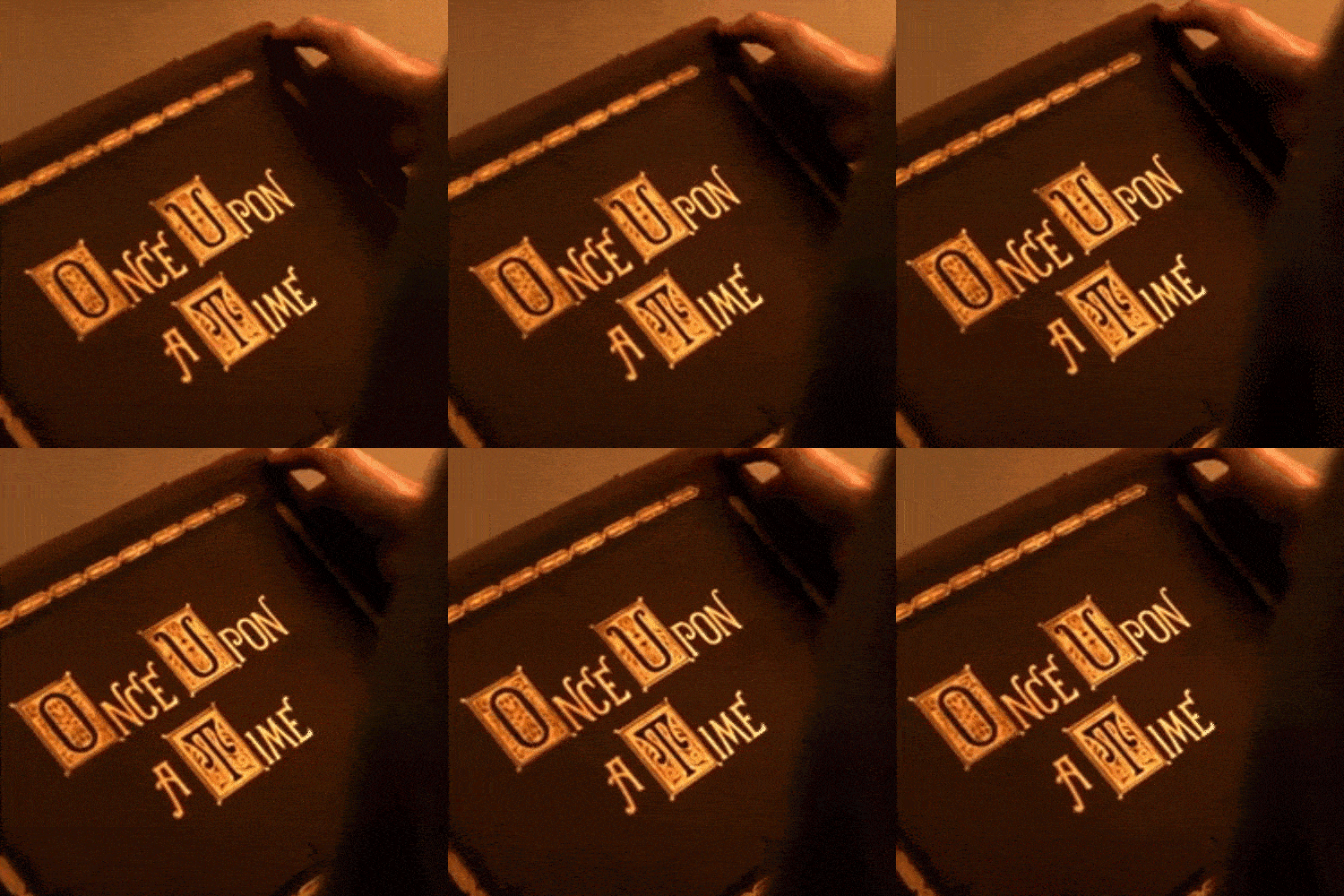
Most English fairy tales begin with "once upon a time." It tells you a story's about to start, and that the usual rules don't apply. Even today, people use it jokingly when telling personal stories. "Once upon a time, I answered a random email, and it turned into my whole career."
Then there's the other bookend: "happily ever after." It's the perfect ending, everything tied up, everyone sorted. In real life, people use it a bit more playfully. "They adopted the scruffiest dog at the shelter and lived happily ever after."
Even now, most people never stop to think about where these expressions came from. They're just part of everyday English, so familiar that questioning their origins doesn't even cross your mind.
But fairy tales have left their fingerprints all over the way we speak, and some of the most beloved stories behind them came from Germany more than two centuries ago. Funny how far a good story can travel.















We are committed to equity,
diversity, and inclusion.
We welcome students,
educators, users, researchers,
and employees from a diverse
set of backgrounds.
Our own backgrounds vary in
terms of socioeconomic status,
religion, race, ethnicity,
gender
identity, sexual orientation,
age, neurodiversity,
disability,
and nationality.
In short: Be you. Do you.
We love and embrace
what makes you you. 
Thank you for inviting us to assess
your web copy!
One of our copy analysts will take
a close look at your website and
get back to you right away.
We appreciate your trust.


