



How Americans talk about holidays

Every American holiday has its own unwritten rulebook. Not just what people do, but what they say, when they say it, and when saying the wrong thing marks you as an outsider. Here's a walk through the ones that matter most, and the phrases that go with them.
New Year's Eve, not New Year's Day, is when the celebration happens. People count down to midnight together, and the moment it hits zero, you'll hear "Happy New Year!" shouted from every direction. That's really the one phrase you need. On New Year's Day itself, conversation tends to turn to resolutions, and asking about them is common small talk.

The third Monday in January honors Martin Luther King Jr. and the civil rights movement he led. Unlike most holidays, you won't hear "Happy MLK Day." It's a day for remembering, not celebrating, so people talk about his legacy or bring up one of his speeches instead of wishing anyone a happy holiday.
Valentine's Day, February 14th, is mainly a couples' holiday. Still, it’s fine to say "Happy Valentine's Day" to anyone. If you're single and someone asks what you're doing for the day, "nothing" is a completely normal answer as well.
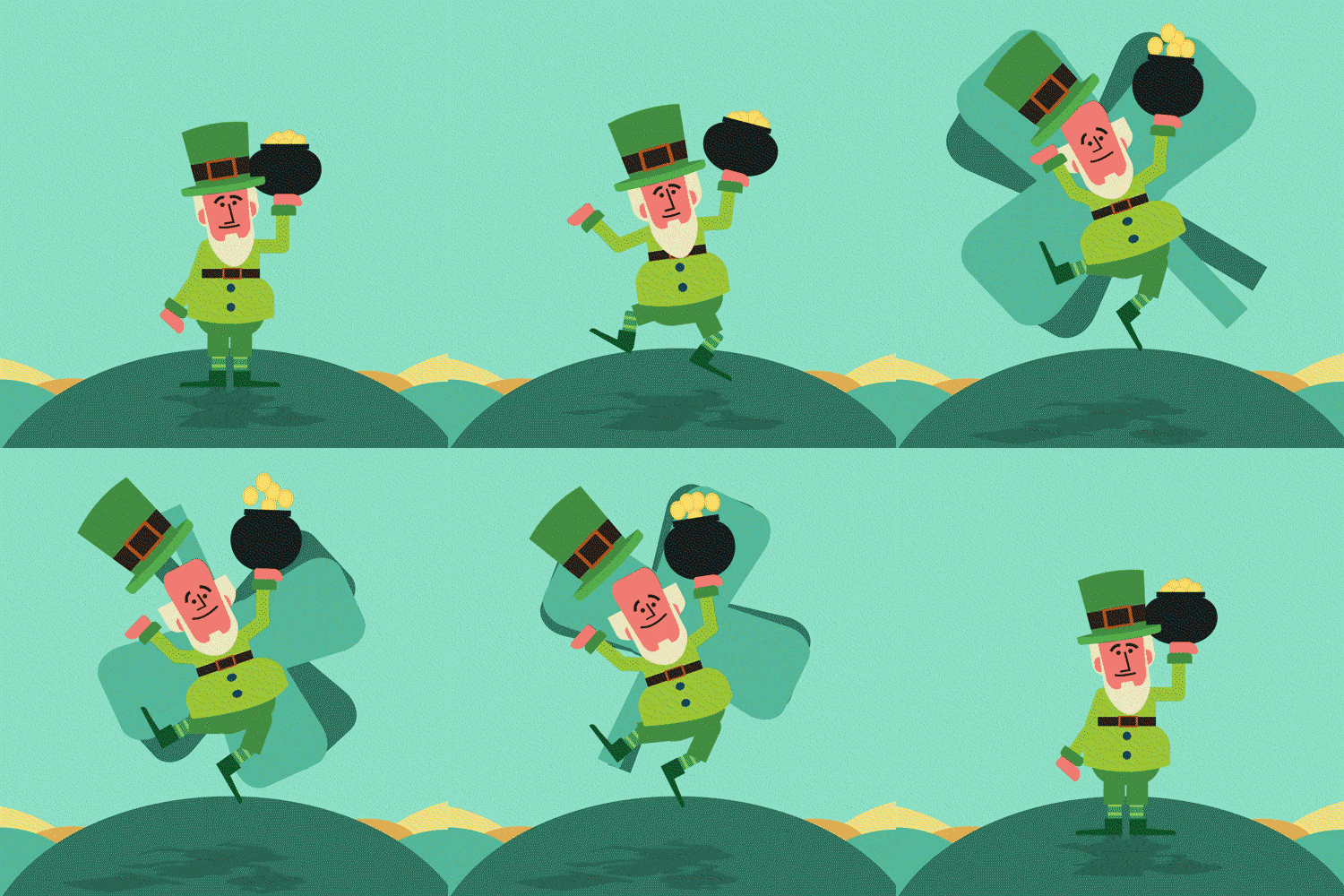
Saint Patrick's Day, March 17th, started as an Irish holiday. But in the US, it's mostly an excuse to wear green and go to a bar.
In everyday conversation, most people just say "St. Patty's Day," and the greeting follows the same pattern: "Happy Saint Patrick's."
Memorial Day, the last Monday in May, honors soldiers who died in military service. That’s why "Happy Memorial Day" can come across as awkward and out of place. Most people avoid the greeting altogether and just talk about having a long weekend instead.
Independence Day, July 4th, is one of the loudest holidays on the calendar: fireworks, parades, barbecues. People say "Happy 4th!" to pretty much everyone.
Halloween, October 31st, is all about costumes and candy, kids especially, going door to door yelling "Trick or treat!" until their bags are full. Some people say "Happy Halloween" as well.

Veterans Day, November 11th, honors everyone who served in the military, living or dead (not to be confused with Memorial Day, which is only for those who died). The standard thing to say to someone who served is "Thank you for your service." Some veterans feel the phrase has lost its meaning from overuse, but there isn't really a widely used alternative yet.
Thanksgiving, the fourth Thursday in November, is built around a big family meal. You can say "Happy Thanksgiving," but it's not a given, plenty of people just ask about your plans instead.
The day after Thanksgiving is Black Friday, when stores run big sales. It kicks off what Americans call "the holiday season," which runs through New Year's Day and covers Christmas, Hanukkah, Kwanzaa, and New Year's all at once. Because of that overlap, people often default to "Happy holidays" or "Season's greetings" instead of naming one holiday specifically.
Americans don't treat every holiday the same way. Some are loud and joyful, like the 4th of July or Halloween, while others are quiet and serious, like Memorial Day or MLK Day. The greeting people use usually tells you which one you're dealing with, so if you're not sure, just listen to what other people are saying first.














We are committed to equity,
diversity, and inclusion.
We welcome students,
educators, users, researchers,
and employees from a diverse
set of backgrounds.
Our own backgrounds vary in
terms of socioeconomic status,
religion, race, ethnicity,
gender
identity, sexual orientation,
age, neurodiversity,
disability,
and nationality.
In short: Be you. Do you.
We love and embrace
what makes you you. 
Thank you for inviting us to assess
your web copy!
One of our copy analysts will take
a close look at your website and
get back to you right away.
We appreciate your trust.


