



How to talk about the gym in English

You want to tell someone you've been working out, but "physically fit" feels like something your doctor would say. Gym vocabulary in English has its own casual register, and knowing it makes the difference between sounding like a textbook and sounding like a real person.
"Physically fit" is accurate, but it's formal. The kind of phrase you'd hear at a doctor's office, not in casual conversation. "In shape" does the same job more naturally. If you've stopped working out and want to describe that, you’d say "out of shape."
One thing worth knowing: in British English, "fit" can also describe someone as attractive. Context usually makes the meaning clear, but in any case, it's worth being aware of.
A few examples:

"Work out" and "exercise" are the two most common general terms, covering everything from cardio to weightlifting to stretching. If you want to describe something more specific, "cardio" refers to exercises that raise your heart rate, like running or cycling.

"Lifting weights" refers to strength training using dumbbells, barbells, or machines. "HIIT" (high-intensity interval training) describes short bursts of intense effort, usually mixed with rest periods.
If you want to ask someone about their exercise habits, "Do you work out?" can come across as a stiff or even flirtatious line. "Do you like going to the gym?" or "Do you hit the gym much?" both sound more natural and conversational.
A few ways this sounds in conversation:
At a busy gym, you'll often need to share equipment or ask someone for help. "Working in" means alternating a piece of equipment with someone else, so neither of you has to wait for the other to finish.
"Spotting" means standing near someone to help them if they can't complete a lift safely. It’s most common with exercises like the bench press, where dropping the weight could be dangerous. If someone asks you for "a spot," they're asking you to stand by in case they need help.
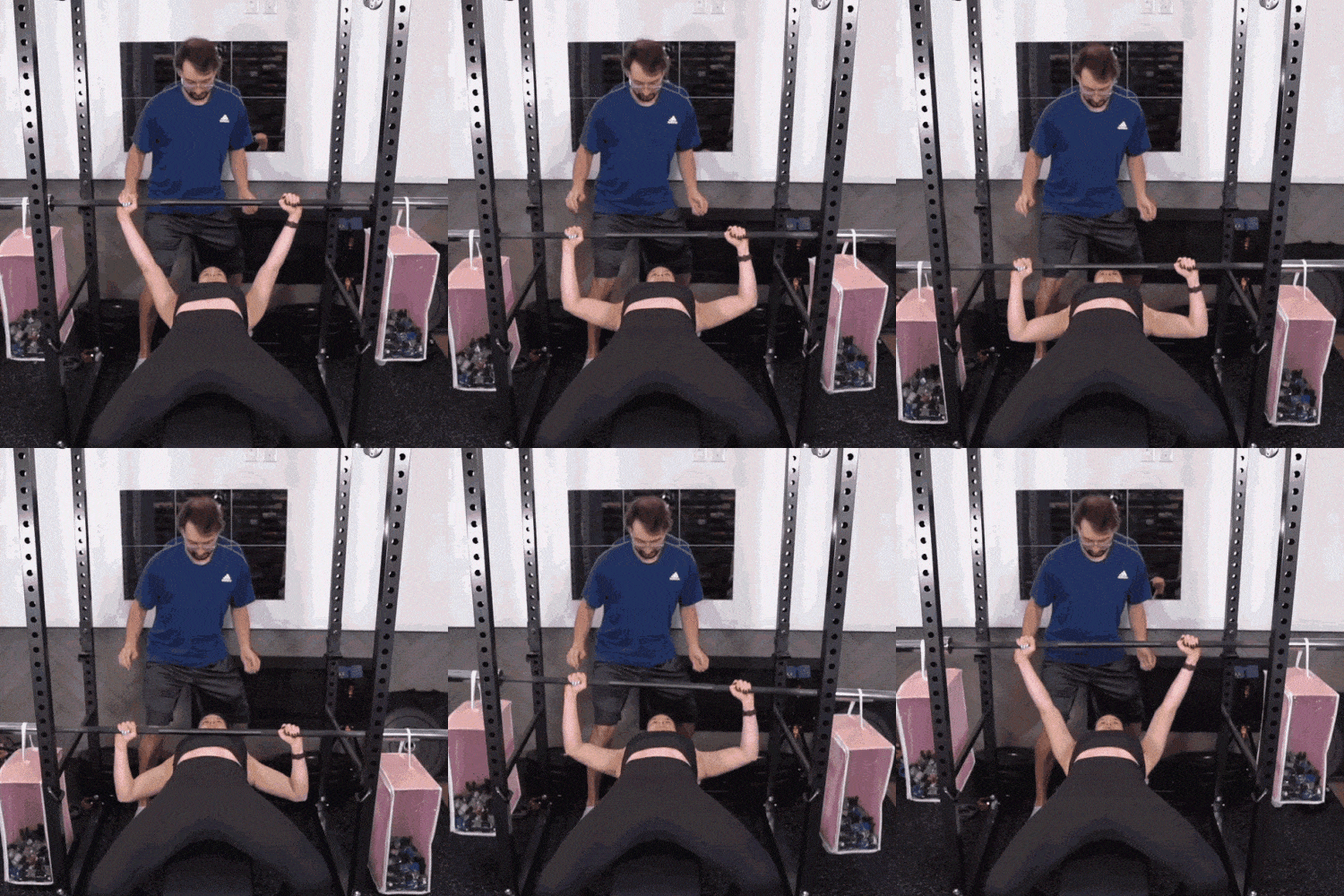
Here's what that sounds like:
A few words describe visible muscle or physical results from training. "Jacked" and "ripped" both describe someone with prominent, well-defined muscles. "Ripped" leans slightly more toward visible definition, while "jacked" leans toward overall size and bulk. "Muscular" is the plain, neutral version of the same idea.

"Buff" means the same thing, but it’s more the kind of word an older movie might use than something you'd hear often today. "Bulking up" refers to the process of intentionally gaining muscle through training and eating more. And it’s usually followed later by "cutting," losing fat while keeping the muscle.
Some natural ways to use these:
Regulars at the gym come with their own slang. A "gym bro" is someone who goes consistently and is deeply into the culture around it. Supplements, routines, and all.
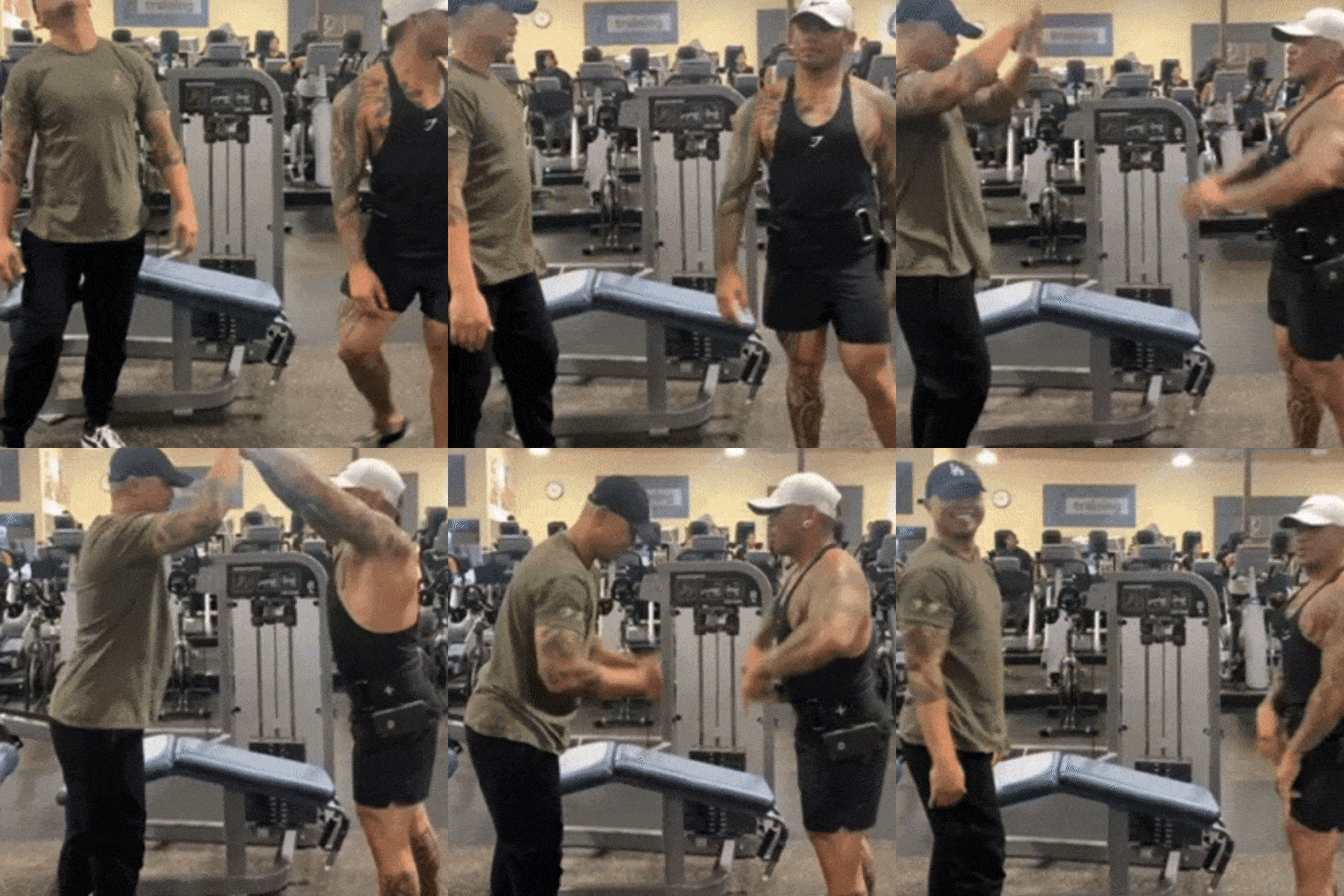
A "weekend warrior" is the opposite, someone who only works out on weekends, often intensely, to make up for a sedentary week.
"Gains" refers to the visible progress from consistent training. It can be more muscle, more strength, or both.
One more round of examples:
These phrases will get you through the basics, and honestly, that's all you need. The gym is one of the few places where a little roughness around the edges works in your favor instead of against you. Save the polished English for somewhere that isn't covered in chalk dust.















We are committed to equity,
diversity, and inclusion.
We welcome students,
educators, users, researchers,
and employees from a diverse
set of backgrounds.
Our own backgrounds vary in
terms of socioeconomic status,
religion, race, ethnicity,
gender
identity, sexual orientation,
age, neurodiversity,
disability,
and nationality.
In short: Be you. Do you.
We love and embrace
what makes you you. 
Thank you for inviting us to assess
your web copy!
One of our copy analysts will take
a close look at your website and
get back to you right away.
We appreciate your trust.


